
aFewSteps.org
  • About Us
  • Our Initiatives
    • Electric Lawn Equipment Initiative
    • Green Energy >
      • how to switch to green energy
    • Shade Trees
    • Waste Free Parties >
      • Dinner & BBQ
      • Block Parties
    • Walking School Buses
  • Green Tips of the Week
  • Recycling
  • Workshops
  • Contact Us

Avoid airplane travel

3/29/2024

 
Picture
As you start to plan your vacations, consider how you travel.  Skipping even one airplane flight greatly reduces your carbon footprint.

This 2017 article in Environmental Research Letters* evaluated several individual actions for their relative impact on greenhouse gas emissions.  One lifestyle choice that they identified as having a disproportionately large contribution was traveling by plane.  They estimate that avoiding one transatlantic flight per year reduces an individual’s annual greenhouse gas emissions by 700–2800 kg CO2e, depending on the length of the flight.  Consider the impact of your mode of travel as you plan your vacations this year.  Plan a trip that does not require airplane travel or take a “staycation” by just taking day trips from home to explore nearby attractions. 


*Seth Wynes and Kimberly A Nicholas. 2017. The climate mitigation gap: education and government recommendations miss the most effective individual actions.  Environ. Res. Lett. 12 074024. DOI 10.1088/1748-9326/aa7541

Photo by V.L., Flickr
Take out invasive English ivy

3/22/2024

 
Picture
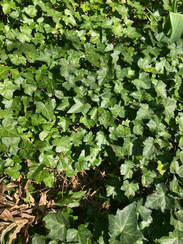
Remove English ivy from trees and landscaping: ivy smothers other plants and adds weight to tree branches making them more likely to fall.

English ivy is an aggressive, invasive vine that is native to Europe, but is now commonly found in gardens and woodlands in the United States.  As an introduced plant, it offers little benefit to native wildlife and is highly detrimental to native plants.  Although it is sold as an ornamental plant, it is crucial to keep it as an indoor plant only. It grows quickly and smothers other plants with its dense leaves on long, trailing vines.  It climbs into shrubs and trees, making trees likely to fall or drop large branches.   Most of its roots do not extend deeply, making it easy to pull out when the soil is soft after it rains.  However, if even a small piece remains, it will eventually regrow, so persistence is needed to keep it at bay.  

For more information, visit the Missouri Botanical Garden and Clemson Cooperative Extension websites.  This green tip has advice for removing ivy from trees.

Photo by Susan O'Donnell

Install a rain barrel

3/15/2024

 
Picture
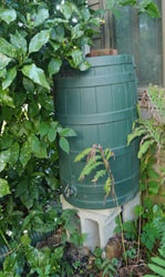
Install a rain barrel to reduce storm runoff and to use as a water supply for outdoor watering needs.

During a rainstorm, rainwater seeps into the ground until the ground is saturated and the remaining water runs off into drains and ultimately streams and rivers.  With the increase in impervious surfaces in cities, less water infiltrates during storms.  The increase in runoff can overwhelm the storm sewer system and cause local flooding.  Harvesting rainwater using a rain barrel reduces the harmful effects of runoff, and on-site use of captured rainwater reduces water treatment needs and reduces the use of potable water for residential uses.


Rain barrels are not difficult to install.  Either cut a downspout to direct water through a screened opening on the top or install a diverter into a downspout that directs water through a tube to the barrel and allows overflow to continue through the downspout once the barrel is full.  Make sure any openings are covered with screen to prevent mosquitoes from breeding in the water.  You can even install a series of barrels, the next one filling when the previous one is full.  A spigot near the bottom of the barrel allows you to fill a watering can or attach a hose.  Placing the barrel on top of cement blocks or stand makes room for filling a watering can.  This water should only be used for watering plants and is not safe for drinking without being treated first. 
 
For more information, see this fact sheet.


Photo by Susan O'Donnell

Store fresh herbs in water

3/8/2024

 
Picture
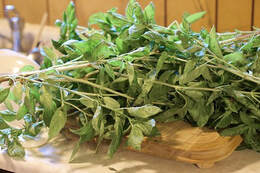
Store fresh herbs upright in a jar or vase of water, like a bouquet of flowers, and enjoy them on your countertop.

Parsley, basil, mint, and other fresh herbs can be stored at room temperature with their stems in a jar of water. Basil in particular prefers room temperature. Instant uplift to your kitchen and spirits! 

Read more here.

Photo by Alan Levine, Flickr

Choose an antique or vintage rug to save resources

3/1/2024

 
Picture
An antique or vintage carpet is unique, more sustainable than a new one, and shoppable online from trusted retailers.

An antique or vintage rug will become part of your family heirlooms. By purchasing one, you lessen the impact on resources that are used to make a new rug. You may also save material from reaching a landfill.

Read more here.


    Categories

    All
    Chemicals
    Environmental Impacts
    Food
    Home Energy
    Outdoors
    Plastic
    Recycle
    Reduce Waste
    Reuse
    Transportation
    Water

    RSS Feed

    Archives

    December 2024
    November 2024
    October 2024
    September 2024
    August 2024
    July 2024
    June 2024
    May 2024
    April 2024
    March 2024
    February 2024
    January 2024
    December 2023
    November 2023
    October 2023
    September 2023
    August 2023
    July 2023
    June 2023
    May 2023
    April 2023
    March 2023
    February 2023
    January 2023
    December 2022
    November 2022
    October 2022
    September 2022
    August 2022
    July 2022
    June 2022
    May 2022
    April 2022
    March 2022
    February 2022
    January 2022
    December 2021
    November 2021
    October 2021
    September 2021
    August 2021
    July 2021
    June 2021
    May 2021
    April 2021
    March 2021
    February 2021
    January 2021
    December 2020
    November 2020
    October 2020
    September 2020
    August 2020
    July 2020
    June 2020
    May 2020
    April 2020
    March 2020
    February 2020
    January 2020
    December 2019
    November 2019
    October 2019
    September 2019
    August 2019
    July 2019
    June 2019
    May 2019
    April 2019
    March 2019
    February 2019
    January 2019
    December 2018
    November 2018
    October 2018
    August 2018
    July 2018
    June 2018
    April 2018
    March 2018
    February 2018
    January 2018
    November 2017
    October 2017
    September 2017
    August 2017
    July 2017
    June 2017
    May 2017
    March 2017
    February 2017
    January 2017
    December 2016
    August 2015
    June 2015
    November 2014
    September 2014
    June 2014
    April 2014
    March 2014
    February 2014
    January 2014
    October 2013
    July 2013
    April 2013
    February 2013
    January 2013
    November 2012
    July 2012
    April 2012

Donate
​About Us
Our Initiatives
Green Tips
Recycling
Workshops
Contact Us
[email protected]

​Mailing Address:
aFewSteps.org
P.O.Box 330
Wallingford PA 19086-0330
©2022-2023 aFewSteps.org  |  All Rights Reserved.