aFewSteps.org
  • About Us
  • Our Initiatives
    • Electric Lawn Equipment Initiative
    • Green Energy >
      • how to switch to green energy
    • Shade Trees
    • Waste Free Parties >
      • Dinner & BBQ
      • Block Parties
    • Walking School Buses
  • Green Tips of the Week
  • Recycling
  • Workshops
  • Contact Us

Buy Bird friendly Habitat certified coffee

10/31/2025

 
Picture
When buying your morning java, select coffee that is certified as Bird Friendly Habitat Coffee to promote coffee growing practices that support birds.

To quench the international thirst for coffee, plantations have sprung up throughout tropical areas, replacing habitat used by both resident and migratory birds.  Americans alone drink 1/3 of the world’s coffee.  The issue has been made worse by the development of sun-loving varieties being grown on large plantations that have already replaced 40% of the shade-grown varieties.  However, by employing sustainable practices, these shade-loving tropical plants can be grown in such a way to recreate necessary bird habitat.  Look for coffee that is certified as Smithsonian Bird Friendly® coffee: it is sustainably grown in shade created by a canopy of at least 60% native plants.

Learn more from The Willistown Conservation Trust.


Eat smaller portions for better health

9/26/2025

 
Picture
People eat less when exposed to smaller portions, according to research. 

Exposure to smaller portions of food changes perceptions of what constitutes a normal amount of food to eat and affects the amount of food people choose to eat in the future.


Read the 2019 article in the journal Food Quality and Preference.


Photo by AVID Vines, Flickr


No oil or grease down the drain

9/5/2025

 
Picture
Collect leftover cooking oil in a sealed container. If you pour it down the sink, even a small amount, “fatbergs” can form that stick to your pipes and lead to blockages. If you have a septic tank, the results are riskier. 


The problem goes beyond having a blockage in your own pipes. Your oil or grease combines with all the other oil and grease floating around in the sewer. When it meets “flushable” wipes and other products, a lethal bond is formed. It may not seem like a big deal to pour a little grease down the sink from time to time, but it becomes a major issue when everyone else is doing the same. The removal of fatbergs costs cities tremendous resources.

                                                      Read more at earth911

Photo by Susan O'Donnell

Beans instead of beef

7/11/2025

 
Picture
Beans, a superstar food, ward off hunger as well as beef, according to a new study using breakfast tortillas. Consider the option of mixing the two together. 

Beans and other legumes are superstars, easy on the planet and packed with nutrients, fiber, and protein. A new study shows they ward off hunger as well as beef. Consider the option of mixing the two together.

Read more here.


Photo by Susan O'Donnell

Fiber reduces PFAS

6/27/2025

 
Picture
Eating more fiber can reduce the levels of two common PFAS or “forever chemicals” in both children and adults, finds a new study in the journal Environmental Health. 

Forever chemicals are present in the blood of almost everyone on the planet, with growing concerns about their toxicity. Researchers hypothesized that a gel formed by dietary fiber could stop the gut’s cell lining from absorbing PFAS.

Photo by Susan O'Donnell

                                                       Read more at Ecowatch.com

Reuse glass jars for food storage

5/9/2025

 
Picture
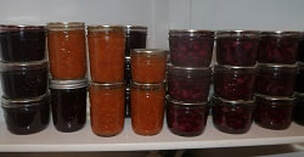
Glass is safer than plastic for food storage: give used glass jars a new life by using them to store food.  

This is especially the case for hot food which can cause chemicals to leach from the plastic container into the food.  You can buy canning jars and re-usable screw-on lids, or even better, wash out jam, peanut butter, or spaghetti sauce jars and use them for storing leftovers.  They are also great for storing food items that you buy in the bulk section, like dry pasta, dried beans, and rice.  Another advantage to glass for storage is that you can see the contents so that you can remember what leftovers need to be eaten (link to other tip).  When your glass jars are no longer useful, recycle them at the Swarthmore Recycling Center.


Extend the life of fresh asparagus

5/2/2025

 
Picture
Spring is the season for fresh asparagus!  Cut down on food waste by following these steps to keep your asparagus fresh longer:
  1. When you get your asparagus home, trim off about 1 inch of the bottom ends.
  2. Stand them upright in a jar or other container filled with about 1 inch of water.
  3. Cover the tops loosely with a plastic bag
  4. Store in the refrigerator
  5. Change the water if it gets cloudy
  6. They should stay fresh this way for at least 3-5 days.
 
Read more here:

Southernliving.com
Foolproofliving.com


Nutritional yeast

4/25/2025

 
Nutritional yeast has an umami flavor that enhances many dishes as well as being a complete protein and high in B12, an important vitamin that much of the population is deficient in.

Nutritional yeast can be used in rice and pasta dishes, salads, soups, popcorn, and more. The key when using it is to add a bit of liquid since it’s dry and flaky—olive oil or fairly moist food works well. 


Read more at TreeHugger.com


Plant-based milk for baking

4/18/2025

 
Picture
Bake with plant-based milk even if you still use dairy. 

Stick with the plain, unsweetened version. Nut milks, coconut milk, and oat milk are all good choices. Their taste aligns perfectly with sweet foods and tends to have a creamy consistency.


Read more at Earth911.com

Photo by Susan O'Donnell


Edible weeds

4/11/2025

 
Picture
Eat your weeds. Seriously, dandelions, purslane, and other common garden weeds are highly nutritious and can be eaten raw or cooked. 

Dandelions are rich in vitamins A, C, and K. They also contain vitamin E, iron, calcium, magnesium, potassium, and B vitamins. Every part of them can be eaten raw or cooked. The list goes on.

Read more at TreeHugger.com

Photo by Susan O'Donnell


<<Previous

    Categories

    All
    Chemicals
    Environmental Impacts
    Food
    Home Energy
    Outdoors
    Plastic
    Recycle
    Reduce Waste
    Reuse
    Transportation
    Water

    RSS Feed

    Archives

    December 2024
    November 2024
    October 2024
    September 2024
    August 2024
    July 2024
    June 2024
    May 2024
    April 2024
    March 2024
    February 2024
    January 2024
    December 2023
    November 2023
    October 2023
    September 2023
    August 2023
    July 2023
    June 2023
    May 2023
    April 2023
    March 2023
    February 2023
    January 2023
    December 2022
    November 2022
    October 2022
    September 2022
    August 2022
    July 2022
    June 2022
    May 2022
    April 2022
    March 2022
    February 2022
    January 2022
    December 2021
    November 2021
    October 2021
    September 2021
    August 2021
    July 2021
    June 2021
    May 2021
    April 2021
    March 2021
    February 2021
    January 2021
    December 2020
    November 2020
    October 2020
    September 2020
    August 2020
    July 2020
    June 2020
    May 2020
    April 2020
    March 2020
    February 2020
    January 2020
    December 2019
    November 2019
    October 2019
    September 2019
    August 2019
    July 2019
    June 2019
    May 2019
    April 2019
    March 2019
    February 2019
    January 2019
    December 2018
    November 2018
    October 2018
    August 2018
    July 2018
    June 2018
    April 2018
    March 2018
    February 2018
    January 2018
    November 2017
    October 2017
    September 2017
    August 2017
    July 2017
    June 2017
    May 2017
    March 2017
    February 2017
    January 2017
    December 2016
    August 2015
    June 2015
    November 2014
    September 2014
    June 2014
    April 2014
    March 2014
    February 2014
    January 2014
    October 2013
    July 2013
    April 2013
    February 2013
    January 2013
    November 2012
    July 2012
    April 2012

Donate
​About Us
Our Initiatives
Green Tips
Recycling
Workshops
Contact Us
[email protected]

​Mailing Address:
aFewSteps.org
P.O.Box 330
Wallingford PA 19086-0330
©2022-2023 aFewSteps.org  |  All Rights Reserved.